The Battle of the AI Titans: DeepSeek-R1 vs. OpenAI ChatGPT
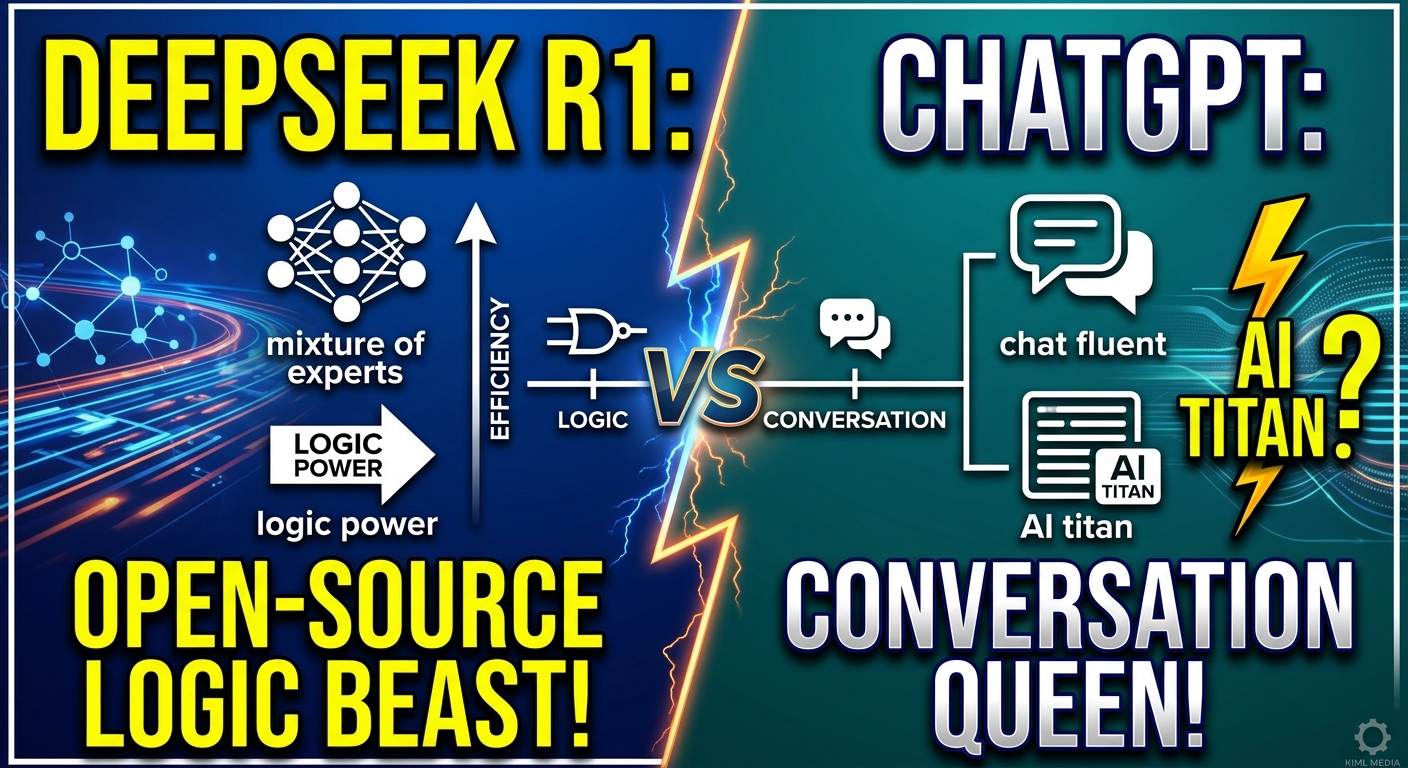
The artificial intelligence landscape is undergoing a massive transformation, marked by rapid technological breakthroughs and shifting industry paradigms. Among the most discussed advancements are two leading large language model ecosystems that have captured the attention of both developers and everyday users: DeepSeek-R1 and OpenAI’s ChatGPT.
While both models demonstrate an unprecedented capacity to process, understand, and generate human-like text, they originate from radically different philosophies. DeepSeek-R1 champions an open-source, cost-efficient approach designed to democratize AI development, whereas ChatGPT represents OpenAI’s continuous commercial push toward advanced conversational fluency, multimodal versatility, and artificial general intelligence (AGI).
1. Architectural Innovation and Philosophy
DeepSeek-R1: Open-Source Openness and Cost Efficiency
DeepSeek-R1 burst onto the global technology scene with a clear mandate: to make high-performance reasoning models universally accessible.
Open-Source Democratization: By releasing source architectures and weights to the global research community, DeepSeek fosters transparency, accelerates peer review, and allows developers to audit biases or security vulnerabilities more effectively.
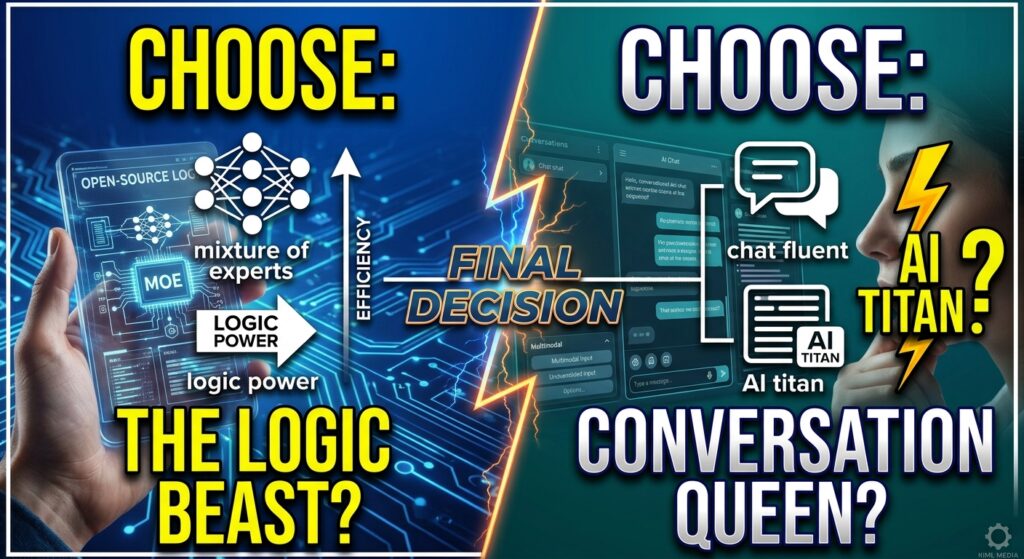
Mixture of Experts (MoE) Architecture: Rather than relying on traditional monolithic models where every parameter fires for every prompt, DeepSeek utilizes a Mixture of Experts framework. This splits computational workloads among specialized sub-networks, ensuring higher context relevance while conserving processing power.
Cost-Effective Training: Through optimization techniques that slash computational overhead, DeepSeek-R1 achieves top-tier reasoning capabilities on hardware far more affordable than what is traditionally required to train frontier models.
ChatGPT: Conversational Fluency and Multimodal Breadth
Developed by OpenAI, ChatGPT remains a dominant force in consumer and enterprise AI applications.
Advanced Natural Language Understanding: Trained on vast, diverse datasets encompassing human literature, code repositories, and scientific papers, ChatGPT exhibits exceptional linguistic fluency and contextual memory across extended dialogues.
Multimodal Integration: Modern iterations of ChatGPT seamlessly bridge text, vision, and audio, allowing users to upload images, generate visual descriptions, and interact dynamically across different media formats.
Proprietary Ecosystem: Unlike open-source counterparts, ChatGPT operates as a closed-source ecosystem managed via centralized cloud APIs and user-friendly web portals.
2. Performance Benchmarks and Functional Strengths
When evaluating how these models perform in real-world scenarios, clear operational differences emerge based on technical benchmarks:
Reasoning vs. Language Generation: Benchmarking data indicates that DeepSeek-R1 excels notably in complex logical reasoning, coding logic, and mathematical problem-solving. Conversely, ChatGPT shines in broad linguistic tasks, creative writing style adaptation, and conversational nuance.
Efficiency and Deployment: DeepSeek-R1 provides developers with the flexibility to deploy lightweight, specialized versions locally or on private cloud servers, minimizing recurring API subscription costs. ChatGPT relies on cloud infrastructure, making it instantly accessible without local computing power but introducing long-term API or subscription expenses.
3. User Experience, Interfaces, and Customization
The practical utility of an AI model depends heavily on its interface and how easily it can be tailored to specific workflows.
Developer Control (DeepSeek-R1): DeepSeek’s open-source foundation grants developers complete control over the model’s inner workings. Engineers can fine-tune weights on proprietary datasets, adjust hyper-parameters, and integrate custom safety guardrails tailored to specialized industries.
Consumer Accessibility (ChatGPT): ChatGPT provides an intuitive, highly polished web and mobile interface. Through tiered subscription models, users can adjust general parameters like response creativity and length, or build custom GPT agents without writing code.
Summary of Model Comparison
DeepSeek-R1: Open-source architecture; highly cost-effective; exceptional at logical reasoning and mathematics; requires technical expertise to deploy and customize.
ChatGPT (OpenAI): Proprietary, closed-source system; highly polished user-friendly interface; superior multimodal capabilities (text, vision, audio); tiered subscription model with broad third-party integrations.
Frequently Asked Questions (FAQs)
1. What is the primary difference between DeepSeek-R1 and ChatGPT? The core difference lies in their distribution model and core strengths. DeepSeek-R1 is an open-source model celebrated for its cost-effective training and superior logical reasoning. ChatGPT is a closed-source, highly polished commercial product known for its conversational fluency and robust multimodal capabilities.
2. Is DeepSeek-R1 truly open-source? Yes. DeepSeek releases its model weights and architectures to the public, allowing developers and researchers to download, modify, fine-tune, and run the models independently on local or private cloud infrastructure.
3. Which model is better for coding and mathematical reasoning? DeepSeek-R1 has garnered widespread acclaim in technical benchmarks for its advanced reasoning capabilities, making it a favorite among software engineers and data scientists for complex coding and math problems.
4. Do I need technical programming skills to use ChatGPT? No. ChatGPT is designed for general audiences, featuring a simple web chat interface and mobile apps that require zero coding knowledge. DeepSeek-R1, however, often requires technical expertise to set up, host, and customize for specific developer pipelines.