




Building Nusantara: Inside Indonesia’s $35 Billion Vision for a Futuristic Capital City
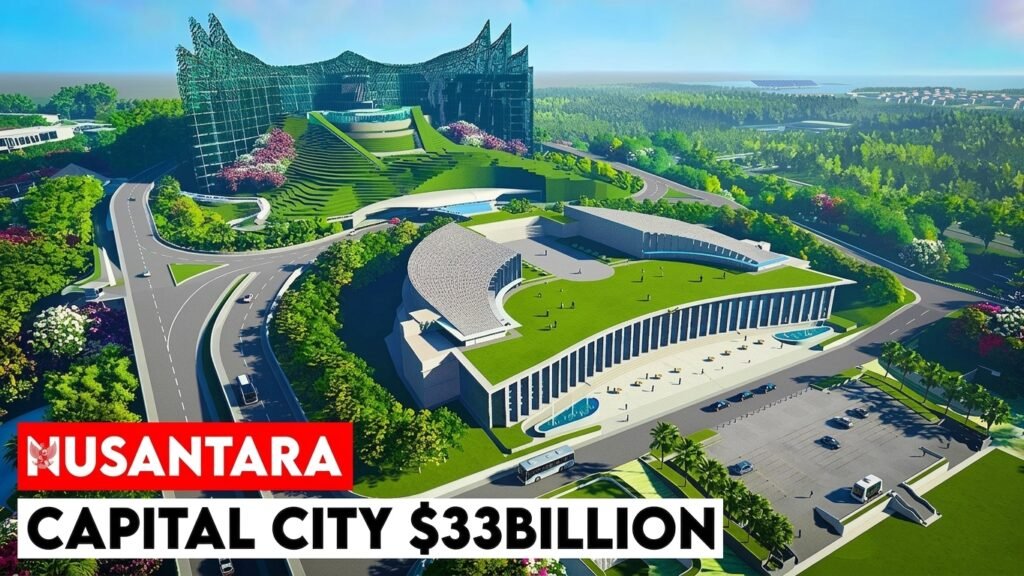
Indonesia is undertaking one of the most ambitious megaprojects in modern history: constructing a brand-new capital city, Nusantara (Ibu Kota Nusantara, or IKN), from the ground up in the tropical forests of East Kalimantan on the island of Borneo.
With an estimated total investment exceeding $33 to $35 billion, Nusantara is designed to transform Indonesia’s economic geography, relieve an overburdened Jakarta, and serve as a global showcase for sustainable, smart-city urban planning.
Why Is Indonesia Moving Its Capital?
The decision to relocate the national seat of government stems from critical environmental, structural, and economic pressures facing the current capital, Jakarta.
       JAKARTA'S CORE CRISES
┌──────────────────────────────────┐
│  Fastest Sinking City Globally   │ ---> Up to 11 inches/year in some districts
├──────────────────────────────────┤
│  Severe Urban Flooding Risk      │ ---> Risk of large areas submerged by 2050
├──────────────────────────────────┤
│  Infrastructure Bottlenecks      │ ---> Extreme traffic congestion & air pollution
├──────────────────────────────────┤
│  Economic Imbalance              │ ---> Java accounts for >56% of national GDP
└──────────────────────────────────┘
Land Subsidence & Sea Level Rise: Unregulated groundwater extraction, dense urbanization, and rising sea levels have made Jakarta the world’s fastest-sinking megacity. Environmental models predict that substantial portions of Northern Jakarta could be submerged by 2050 if left unchecked.
Overpopulation & Congestion: Home to over 10 million people (and more than 30 million in the greater metropolitan area), Jakarta faces severe traffic paralysis and environmental degradation.
Economic Decentralization: Over 56% of Indonesia’s GDP and nearly 60% of its population remain concentrated on the island of Java. Moving the capital to East Kalimantan shifts national development toward an “Indonesia-centric” model rather than a “Java-centric” one.
Key Urban Design & Blueprint Specifications
Master-planned by Indonesian architecture and urban design firm Urban Plus, Nusantara’s blueprint balances high-tech infrastructure with ecological preservation.
| Metric / Dimension | Target Specification / Design Standard |
| Total Territory Area | ~2,562 km² (4x larger than Jakarta, 40x larger than Manhattan) |
| Projected Population | ~1.9 million to 2 million residents by 2045 |
| Green & Open Space | 65% dedicated to forest rewilding, parks, and protected reserves |
| Agricultural Zone | 10% allocated to vertical farming and urban agriculture |
| Built Footprint | 25% allocated to government, residential, and commercial zones |
| Target Transit Share | 80% of trips via electric public transit, walking, or cycling |
| Service Proximity | 10-minute access to essential public services from any location |
Architectural Feats & Smart Forest Innovations
To harmonize a high-density urban core with a tropical rainforest ecosystem, engineers and architects are utilizing specialized construction techniques:
1. Elevated Walkways & Stilts
Buildings in the Central Government Core (KIPP) and surrounding sectors are designed on elevated stilts. This minimizes topsoil disturbance, preserves natural wildlife corridors, improves natural air ventilation, and manages tropical storm runoff without soil erosion.
2. Zero-Emission Transit & 10-Minute City
Nusantara prioritizes a completely electric and hydrogen-powered transit system, integrated with extensive bike highways and pedestrian pathways. Elevated skywalks link transit hubs to major commercial and government centers.
+-----------------------------------------------------------------------+
|                       10-MINUTE MOBILITY RING                         |
|                                                                       |
|  [ Micro-Mobility / Pedestrian ] ---> [ Elevated Skywalk System ]    |
|                                                     │                 |
|                                                     ▼                 |
|  [ Zero-Emission Public Bus/Rail ] <--- [ Smart Micro-Grid Nodes ]   |
+-----------------------------------------------------------------------+

3. Circular Resource Systems
Energy: Powered entirely by renewable micro-grids, incorporating solar farms, hydro projects, and experimental virtual power systems.
Water & Waste: Advanced rainwater harvesting, graywater recycling, and closed-loop composting setups aimed at achieving near-zero waste to landfill.
Project Timeline & Implementation Phases
The construction of Nusantara is structured across five distinct phases running through 2045:
[Phase 1: 2022-2024/2025] ---> [Phase 2: 2025-2029] ---> [Phase 3-5: 2030-2045]
 Core Government & KIPP         Commercial Expansion     Full Metro Integration
Phase 1 (2022–2025): Focuses on the Central Government Core (KIPP), including the Presidential Palace, Vice Presidential Palace, foundational roads, and civil servant housing.
Phase 2 (2025–2029): Focuses on the construction of the legislative (Parliament) and judicial complexes, expanded civil servant relocations, and initial economic zones.
Phases 3–5 (2030–2045): Expansion into high-tech industry parks, universities, research centers, and full integration as a global economic hub coinciding with Indonesia’s centenary (Golden Indonesia 2045).
Key Challenges and Controversies
Despite its inspiring vision, Nusantara faces significant logistical, financial, and socio-environmental scrutiny:
Funding & Investment Dependencies:
The state budget (APBN) covers roughly 20% of total construction costs. The remaining 80% relies on private domestic and foreign direct investment (FDI). Attracting sufficient long-term private capital remains an ongoing priority for the Nusantara Capital City Authority (OIKN).
Environmental & Ecological Risks:
Although the city is being built primarily on former commercial eucalyptus logging plantations rather than pristine virgin forest, environmentalists warn that secondary impacts—such as road networks splitting ecosystems—could threaten local biodiversity, including endangered species like orangutans and proboscis monkeys.
Indigenous Rights & Land Custodianship:
Local indigenous communities, such as the Balik and Paser peoples who have inhabited the region for generations, have voiced concerns over land tenure, customary rights, and the potential for displacement as urban boundaries expand.
Logistics & Weather Delays:
Heavy equatorial rainstorms, seasonal tropical conditions, and complex supply lines for raw materials present constant engineering hurdles for on-schedule delivery.
Frequently Asked Questions (FAQs)
What does the name “Nusantara” mean?
“Nusantara” is an ancient Javanese term meaning “outer islands” or “archipelago”. It was selected to represent Indonesia’s national geopolitical vision (Wawasan Nusantara) and celebrate the unity of its 17,000+ islands.
Will Jakarta be completely abandoned?
No. Jakarta will remain the commercial, financial, and economic center of Indonesia. The relocation specifically targets the executive, legislative, and judicial branches of the federal government, similar to the relationships between Washington D.C. and New York City, or Canberra and Sydney.
How much will the total relocation cost?
The total multi-phase build is projected to cost approximately $33 to $35 billion (around IDR 466–523 trillion) through 2045.
Strategic Policy & Official Resources
For detailed official planning documents, progress reports, and environmental management updates, refer to these authoritative channels:
Nusantara Capital City Authority (OIKN Portal): Official project repository for master plans, investor guidelines, and tender announcements.
Ministry of Public Works and Public Housing (PUPR): Government agency executing primary civil infrastructure, road connectivity, and water distribution networks.
National Development Planning Agency (BAPPENAS): Strategic body coordinating the overarching “Golden Indonesia 2045” master development framework.