

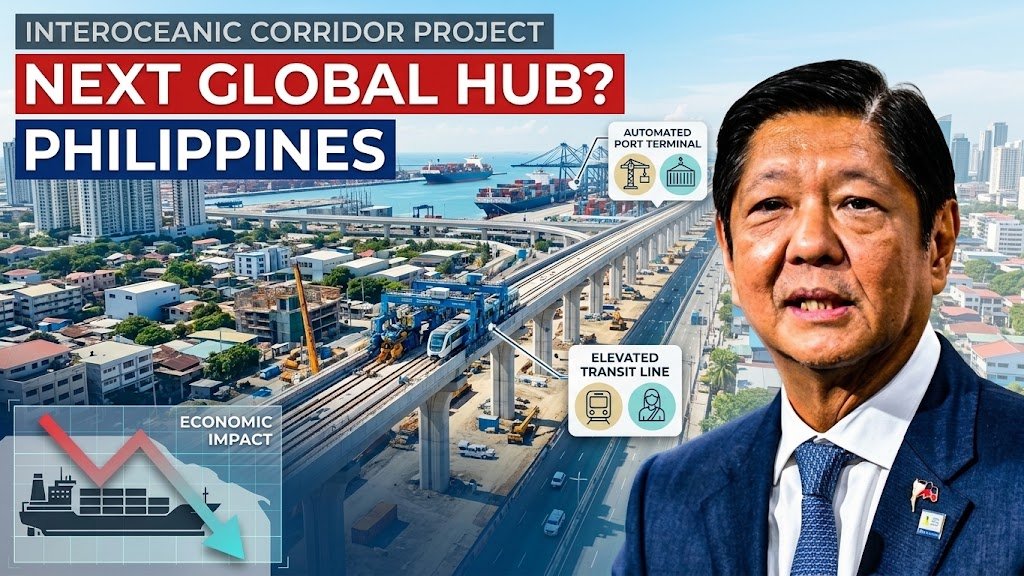


Modernizing the Philippines: 6 Infrastructure Projects Transforming National Connectivity
For decades, underinvestment in infrastructure served as a critical economic bottleneck for the Philippines. Ranking lower in overall infrastructure quality relative to several of its ASEAN neighbors, the nation faced severe urban congestion, high logistical costs, and regional fragmentation across its major island groups.
To address these challenges, the government launched massive public works programs—originally under the “Build, Build, Build” banner and continued through the “Build Better More” initiative. Below is an overview of six key infrastructure mega-projects designed to modernize transportation, reduce regional economic disparities, and accelerate long-term national growth.
1. Malolos–Clark Railway Project
Part of the broader 147-kilometer North-South Commuter Railway (NSCR) system, the Malolos–Clark Railway is an Asian Development Bank (ADB)-financed project designed to link Metro Manila directly to Clark International Airport and Central Luzon.
+-------------------------------------------------------------------------+
|                     MALOLOS–CLARK RAILWAY AT A GLANCE                   |
+-------------------------------------------------------------------------+
|  Primary Route:      Malolos, Bulacan to Clark International Airport    |
|  Parent System:      North-South Commuter Railway (NSCR)                |
|  Travel Time Shift:  Reduces bus transit from 2–3 hours to ~1 hour      |
|  Funding Source:     Asian Development Bank (ADB) & JICA                |
+-------------------------------------------------------------------------+
Key Highlights
Economic Relief: Designed to help offset the estimated $18 billion annual economic loss caused by traffic congestion in Metro Manila by diverting passenger traffic to high-speed rail.
Job Creation: Generated over 24,000 local construction jobs, with an additional 1,400 long-term operational roles expected upon full deployment.
Regional Integration: Serves as a primary transit backbone connecting industrial hubs in Central Luzon to the national capital region.
2. Metro Manila Subway Project (MMSP)
As the first mass underground transit system in the Philippines, the Metro Manila Subway represents a landmark civil engineering venture aimed at relieving severe gridlock across the capital’s main surface arteries.
[ Valenzuela Depot ] ---> [ 17 Underground Stations ] ---> [ NAIA Terminal 3 ]
                            (33.1 km Total Distance)
Operational Scope
Route Coverage: Spans 33.1 kilometers from Valenzuela City to the Ninoy Aquino International Airport (NAIA) Terminal 3.
Capacity: Built to accommodate up to 1.5 million passengers daily at full operational capacity.
Strategic Impact: Connects major business districts across Metro Manila while providing direct rapid transit to the country’s primary international airport terminal.
3. Luzon–Samar Link Bridge Project
The proposed Luzon–Samar Link Bridge is an ambitious long-span infrastructure concept intended to establish a permanent overland connection across the San Bernardino Strait.
Strategic Objective
Cross-Island Connectivity: Designed to replace the current 90-minute ferry crossing between Matnog, Sorsogon (Luzon) and Allen, Northern Samar (Visayas).
Engineering Innovations Evaluated: Feasibility studies conducted in coordination with international infrastructure advisers have explored long-span bridges, deep-sea tunnels, and submerged floating tunnel concepts across the 28-kilometer strait.
Logistical Value: Provides continuous freight movement along the Pan-Philippine Highway (AH26), strengthening economic ties between Luzon, Visayas, and Mindanao.
4. Davao International Airport Expansion
Located in Mindanao, the Francisco Bangoy International Airport (Davao International Airport) serves as the primary air transit hub for the southern Philippines.
+-------------------------------------------------------------------------+
|                  DAVAO INTERNATIONAL AIRPORT UPGRADES                   |
+-------------------------------------------------------------------------+
|  Focus Areas:        Passenger terminal expansion and modernization     |
|  Equipment Updates:   New escalators, elevators, and baggage systems     |
|  Capacity Goal:      Accommodate surging passenger & cargo volume       |
|  Regional Role:      Primary tourism & commerce gateway for Mindanao     |
+-------------------------------------------------------------------------+
Key Enhancements
Passenger Terminal Upgrades: Expanded check-in halls, enlarged domestic/international arrival areas, and upgraded mechanical systems.
Regional Impact: Supports growing trade, eco-tourism, and commercial integration within the Brunei-Indonesia-Malaysia-Philippines East ASEAN Growth Area (BIMP-EAGA).

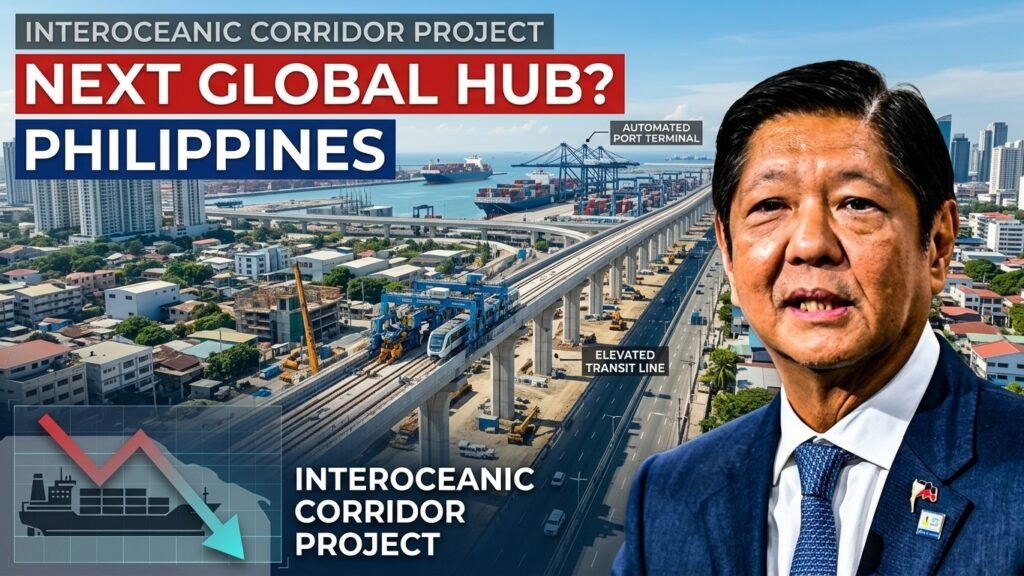
5. PNR South Long Haul Project (PNR Bicol)
The PNR South Long Haul project is an extensive rail modernization initiative aimed at restoring and upgrading the historic Philippine National Railways (PNR) Southern Mainline.
| Project Metric | Specification |
| Track Gauge | Upgrade from legacy Narrow Gauge to Standard Gauge |
| Total Distance | Approximately 565 kilometers |
| Planned Stations | 35 stations |
| Key Termini | Batangas City (Batangas) to Daraga (Albay) |
| Network Integration | Connects directly with the North-South Commuter Railway |
Economic Benefits
Freight & Passenger Efficiency: Re-establishes a high-capacity rail artery connecting agricultural and industrial centers in Southern Luzon (Calabarzon and Bicol regions) to urban markets.
Regional Mobility: Dramatically cuts travel times between Manila, Batangas, and the Bicol Peninsula while reducing reliance on long-distance highway transport.
6. North Luzon East Expressway (NLEE)
The North Luzon East Expressway is a planned multi-stage tollway project designed to create a direct inland corridor along the eastern side of Central and Northern Luzon.
[ Metro Manila / Quezon City ]
             |
   (Stage 1: La Mesa Parkway)
             |
   [ Norzagaray, Bulacan ]
             |
   (Succeeding Stages)
             |
   [ Gapan, Nueva Ecija & Northward ]
Key Features
Congestion Relief: Provides an alternative route to the existing North Luzon Expressway (NLEX), bypassing heavily congested urban bottlenecks in northeastern Metro Manila.
Water-Sensitive Design: Integrates environmental engineering concepts, including specialized rainwater runoff collection and filtration systems, to minimize ecological impact along the watershed areas it traverses.
Frequently Asked Questions
How do these projects impact traffic congestion in Metro Manila?
Projects like the Metro Manila Subway and the North-South Commuter Railway (including the Malolos–Clark line) provide high-capacity, off-road mass transit options. By shifting hundreds of thousands of daily commuters from buses and private cars onto rail, these projects directly reduce surface road gridlock.
What is the difference between Narrow Gauge and Standard Gauge railways?
Legacy rail systems in the Philippines mostly utilized Narrow Gauge tracks (3 ft 6 in / 1,067 mm). Modern projects like the PNR South Long Haul use Standard Gauge (4 ft 8.5 in / 1,435 mm), which allows for higher train speeds, greater stability, heavier load capacity, and easier sourcing of modern rolling stock globally.
How does the Luzon–Samar Link Bridge benefit national logistics?
Currently, trade between Luzon and the Visayas relies heavily on roll-on/roll-off (RoRo) ferries, which are subject to weather delays, high port costs, and long queuing times. A physical fixed link enables uninterrupted trucking and passenger movement across the San Bernardino Strait.