




The Future of Flight: Transforming Global Airports for Tomorrow’s Travelers
1. Introduction to Modern Aviation’s Growing Pains
Managing Record-Breaking Passenger Volumes
Global aviation continues to expand at a staggering pace, with over four billion passengers taking to the skies annually. However, this historic surge in air travel has exposed severe operational bottlenecks. Airports constructed decades ago were never engineered to handle modern crowd densities, resulting in frustrating queues, delayed flights, and stressed terminal infrastructure. Addressing these systemic challenges requires bold, visionary thinking and an aggressive embrace of advanced engineering and automation.
Balancing Exploration with Environmental Responsibility
Beyond passenger congestion, the aviation industry faces an urgent imperative to address its substantial environmental footprint. From fuel-guzzling aircraft fleets to energy-intensive terminal operations, modern transport hubs are under intense pressure to decarbonize. The airports of tomorrow must successfully balance our innate desire for global exploration with strict environmental stewardship, integrating eco-friendly architecture and sustainable resource management into every facet of daily operations.
2. Biometric Authentication and the Death of Long Lines
Facial Recognition and Instant Verification
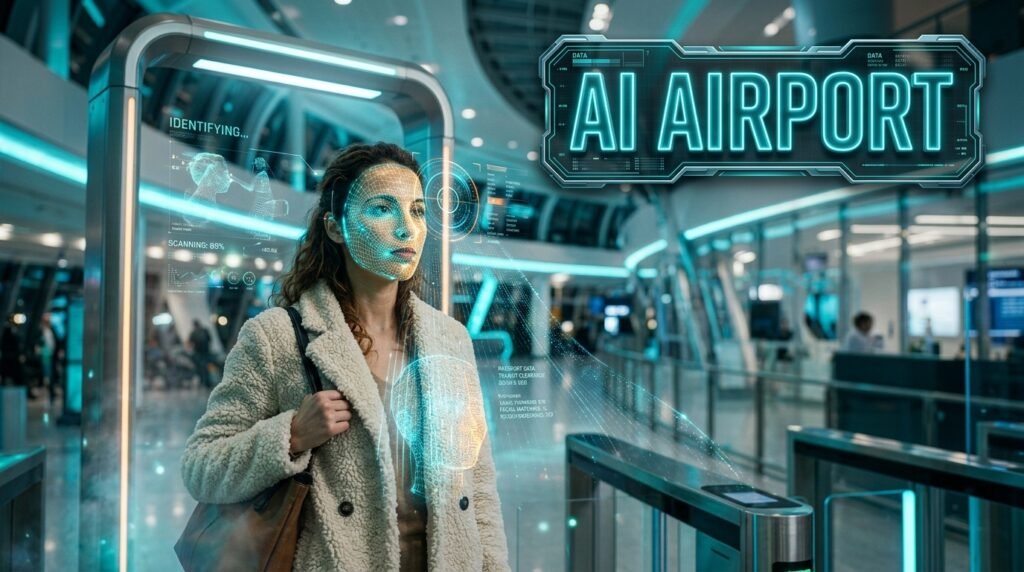
The frustrating rituals of fumbling for paper boarding passes and waiting in slow-moving security queues are rapidly becoming relics of the past. Modern aviation is embracing cutting-edge biometric technologies—including advanced facial recognition, iris scanning, and secure fingerprint verification—to streamline passenger processing. Travelers can now approach automated departure gates, look briefly into an optical sensor, and verify their identity in mere seconds.
Data Privacy and Security Standards
While biometric integration drastically accelerates passenger throughput, data privacy remains paramount. Modern security frameworks ensure that sensitive biometric information is heavily encrypted and securely stored, allowing travelers to enjoy unprecedented convenience without compromising their personal privacy or risking data breaches.
3. Smart Terminals and Artificial Intelligence Integration
Real-Time Wayfinding and Digital Displays
Navigating sprawling, maze-like airport terminals can disorient even the most seasoned travelers. Smart terminals of the future utilize dynamic digital displays, augmented reality wayfinding, and artificial intelligence assistants to guide passengers seamlessly from check-in counters to boarding gates. These interactive systems provide real-time updates on flight schedule changes, gate reassignments, and personalized recommendations for dining and retail amenities.
Behind-the-Scenes Optimization
Beneath the surface of the passenger experience, smart terminals deploy extensive sensor arrays, optical cameras, and predictive data analytics. These backend systems monitor real-time passenger flow density, optimize baggage handling routes, and proactively manage gate assignments to prevent bottlenecks before they occur, ensuring that the entire airport ecosystem operates with peak efficiency.
4. Sustainability and Eco-Friendly Airport Practices
Renewable Energy and Electric Fleets
Transforming airports into environmental champions requires a fundamental shift in how power is generated and consumed. Forward-thinking aviation hubs are integrating large-scale solar panel arrays across terminal rooftops and harnessing wind turbines to supply clean electricity. Furthermore, ground support operations are electrifying their vehicle fleets—ranging from baggage tractors and cargo loaders to passenger buses—to drastically cut direct carbon emissions.
Water Conservation and Green Architecture
True sustainability extends across all operational domains, prompting airports to adopt advanced water recycling systems, comprehensive waste reduction protocols, and large-scale composting programs. Additionally, incorporating indoor green walls, vertical gardens, and natural light optimization helps improve indoor air quality while creating calming, restorative environments for stressed travelers.
5. Automation and the Rise of Airport Robotics
Relieving Staff Through Task Automation
Robotics and automation are revolutionizing terminal services, stepping in to handle repetitive, labor-intensive tasks and freeing up human personnel to focus on high-value guest relations and complex problem-solving. Autonomous mobile robots are now deployed across advanced hubs to assist with cleaning floors, delivering misplaced luggage, and guiding confused passengers to their respective gates.
Enhancing Safety and Precision
Automated systems minimize the risk of human error in sensitive operational areas. From automated security screening assistants to robotic coffee kiosks and customer service bots equipped with multilingual speech processing, automation ensures consistent service quality while maintaining high safety standards across bustling public spaces.
6. Architectural Evolution: Form Meets Function
Creating Urban Oases and Passenger Comfort
The sterile, utilitarian concrete terminals of the previous century are being replaced by breathtaking architectural masterpieces that prioritize human well-being. Modern airport designs feature soaring glass ceilings flooded with natural sunlight, open-air concourses, and biophilic layouts that actively combat travel fatigue and jet lag.
Ergonomics and Stress Reduction
Every structural detail is thoughtfully curated to reduce passenger stress. Architects are integrating ergonomic seating zones, abundant mobile device charging stations, quiet reflection spaces, and acoustic dampening materials to transform layovers from dreaded inconveniences into relaxing and enjoyable experiences.

7. The Connected Traveler and Hyper-Personalization
Smartphones as Ultimate Travel Concierges
The modern smartphone serves as an indispensable travel companion, centralizing flight bookings, mobile boarding passes, real-time baggage tracking, and pre-ordered dining into a single interface. High-speed terminal Wi-Fi and push notifications ensure that passengers remain connected and informed throughout every stage of their journey.
Tailoring the Passenger Experience
Leveraging artificial intelligence and predictive data analytics, future airports will tailor services to individual passenger preferences. Whether a traveler seeks a quiet relaxation zone, a family-friendly play area, or customized culinary recommendations based on dietary needs, the airport environment adapts dynamically to offer a truly bespoke travel experience.
8. Case Study: Jewel Changi Airport in Singapore
Merging Nature and Cutting-Edge Technology
Serving as the global gold standard for modern airport design, Jewel Changi Airport in Singapore successfully redefines what an aviation hub can achieve. Jewel seamlessly integrates a multi-level indoor forest with the world’s tallest indoor waterfall—the Rain Vortex—creating a mesmerizing natural oasis right in the middle of a bustling transit hub.
A Destination in Its Own Right
Beyond its stunning aesthetic appeal, Jewel Changi houses hundreds of world-class retail shops, fine-dining restaurants, and recreational attractions like the Canopy Park. By blending breathtaking biophilic architecture with seamless biometric authentication and smart terminal efficiency, Jewel proves that an airport can transcend its traditional function and become an unforgettable destination in its own right.
Frequently Asked Questions (FAQs)
1. How does facial recognition improve the airport experience?
Biometric facial recognition allows passengers to verify their identity instantly at security checkpoints and boarding gates without needing to fumble for physical passports or boarding passes.
2. What role do Autonomous Mobile Robots (AMRs) play in modern airports?
AMRs handle repetitive tasks such as terminal cleaning, luggage delivery, passenger wayfinding, and customer service inquiries, improving overall operational efficiency.
3. How are airports reducing their environmental carbon footprint?
Airports are adopting renewable energy sources like rooftop solar panels, transitioning ground support vehicle fleets to electric power, and implementing comprehensive water conservation and waste reduction programs.
4. What is the architectural philosophy behind modern airport terminals?
Modern terminals prioritize passenger comfort, open-air spaces, abundant natural light, biophilic elements like indoor gardens, and ergonomic seating to reduce travel stress and combat jet lag.
5. What makes Jewel Changi Airport unique?
Jewel Changi features the world’s tallest indoor waterfall surrounded by a multi-level indoor forest and extensive retail spaces, effectively blending nature, technology, and high-end hospitality.
6. How do smart terminals assist passengers with navigation?
Smart terminals utilize interactive digital displays, augmented reality wayfinding, and AI-powered mobile applications to provide real-time flight updates and personalized route guidance.
7. Why is hyper-personalization becoming prominent in air travel?
Airports use data analytics and artificial intelligence to understand passenger preferences, offering tailored shopping, dining, and relaxation recommendations that cater to individual needs.
Authoritative References
-
Airports Council International (ACI) – World Airport Traffic Report and Global Trends
-
International Air Transport Association (IATA) – Global Passenger Survey and Biometric Integration Standards
-
Skytrax World Airport Awards – Terminal Design, Innovation, and Excellence Rankings