The Infrastructure Game-Changers Shaping South Africa’s Future
South Africa is undergoing a monumental infrastructural transformation. From massive industrial expansions and futuristic smart cities to national rail revamps and clean energy transitions, the country is executing a series of ambitious projects designed to catalyze economic growth, create thousands of jobs, and elevate its global technological standing.
1. Top 9 Infrastructure Projects Transforming South Africa
1. South African Green Hydrogen Mega Project
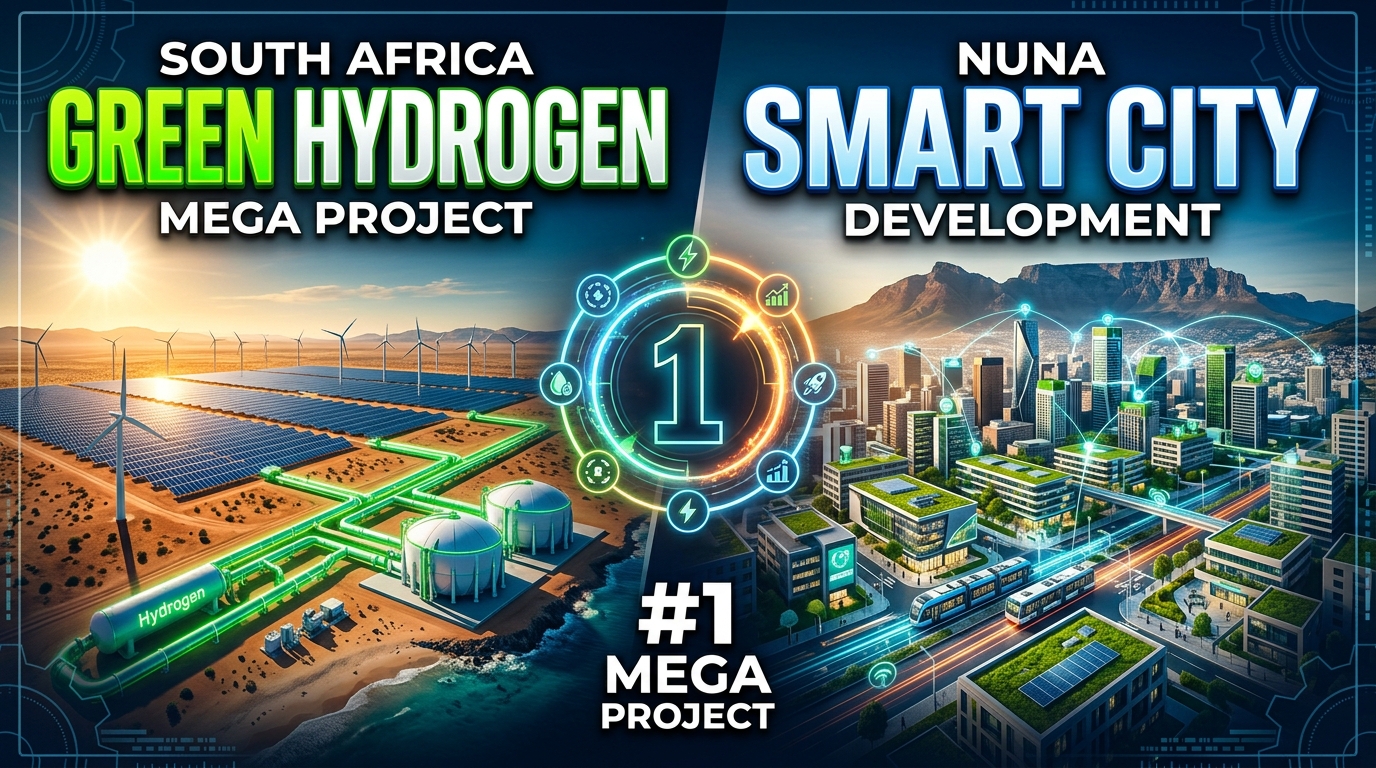
Taking the top spot on South Africa’s modernization agenda is the Green Hydrogen Mega Project. Powered by vast wind and solar farms, the initiative utilizes large-scale electrolyzers to split water into clean hydrogen fuel. Designed to drastically reduce the nation’s carbon footprint, the project positions South Africa as a key global exporter of zero-emission energy and a frontrunner in the clean energy transition.
2. Eskom Power Plant Refurbishments
To secure a reliable energy baseline, state power utility Eskom is modernizing and refurbishing its aging coal-fired power station fleet. The program focuses on integrating advanced emissions-reduction equipment, optimizing thermal efficiency, and stabilizing the national electrical grid to support future industrial demand and generation needs.
3. Space Industry & Satellite R&D Expansion
South Africa is advancing its position in the global space sector by expanding its space research, development, and satellite manufacturing capabilities. By collaborating with international space agencies, local engineers and scientists are developing sovereign satellite technology, enhancing telecommunications networks, and fostering high-tech innovation.
4. Domestic Vaccine Production Facilities
To achieve long-term public health security, South Africa is establishing domestic pharmaceutical manufacturing and vaccine production facilities. Supported by public-private partnerships, these specialized facilities reduce reliance on medical imports, strengthen regional healthcare sovereignty, and accelerate local medical R&D during public health crises.
5. Urban Township Revitalization Initiatives
Across the nation, major township revitalization projects are transforming local economies by upgrading roads, installing reliable sanitation systems, and expanding community healthcare and educational infrastructure. Rather than focusing solely on basic maintenance, these programs aim to create self-sustaining economic hubs and improve local living standards.
6. Mooi River Bulk Water Supply Scheme
Addressing severe water security challenges across Gauteng Province, the Mooi River Bulk Water Supply Project expands regional water storage, treatment, and distribution infrastructure. Scheduled to secure steady bulk water flows for industrial, commercial, and residential hubs, it forms a core foundation for future economic stability in South Africa’s economic heartland.
7. Transnet Freight Rail Network Expansion
State-owned logistics entity Transnet is carrying out a sweeping expansion of its freight rail infrastructure. By laying heavy-haul rail lines that connect inland mining and industrial centers directly to major maritime ports, the project streamlines heavy transport, cuts supply-chain costs, and reduces commercial traffic congestion on national expressways.
8. Nkwashi (Nuna) Smart City Development
Spearheaded near Johannesburg, the Nkwashi / Nuna Smart City development represents an ambitious model for eco-conscious urban living. Combining modern energy-efficient Smart Homes, integrated green transit loops, and extensive civic parks, the community is engineered to provide a high-tech, low-carbon urban lifestyle for businesses and families alike.
9. Gamsberg Zinc Mine Phase 2 Expansion
Located in the Northern Cape, the Gamsberg Phase 2 Expansion—developed by Vedanta Zinc International—is doubling the site’s mining capacity from 4 million to 8 million tonnes of ore annually. By adding a second 4 Mtpa concentrator plant, the $550 million expansion increases output to nearly 500,000 tonnes of zinc-in-concentrate per year, establishing Gamsberg as one of the largest zinc-producing complexes in the world and driving regional job creation.
Frequently Asked Questions (FAQs)
1. Who owns and operates the Gamsberg Zinc Mine?
The Gamsberg operation is owned and developed by Vedanta Zinc International (a subsidiary of Vedanta Limited) in partnership with Exxaro Resources and an Employee Share Ownership Plan (ESOP).
2. What is the goal of the South African Green Hydrogen Mega Project?
The project aims to utilize South Africa’s high solar and wind capacity to produce zero-emission green hydrogen via water electrolysis, serving both local heavy industry decarbonization and export markets.
3. How does the Transnet Freight Rail Expansion benefit the local economy?
By shifting heavy industrial freight and mineral exports from highway roads onto high-capacity rail lines, the expansion reduces road damage, cuts supply-chain costs, and speeds up cargo movement to major export terminals like Durban and Richards Bay.
4. Why is the Mooi River project critical for Gauteng Province?
Gauteng is South Africa’s most populous and economically active province. The Mooi River project expands bulk water storage and treatment capacity, ensuring stable water supply for millions of residents and heavy industries.