
The Empty Skyscrapers of New York’s Billionaires’ Row: Architecture, Real Estate, and Urban Impact
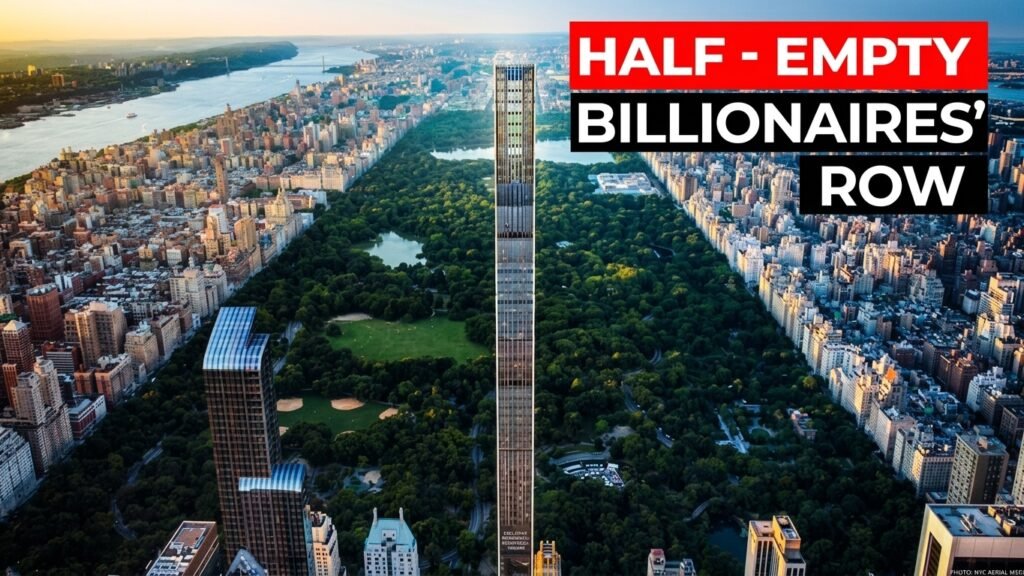
The rise of “Billionaires’ Row”—a informal collection of ultra-luxury, supertall residential skyscrapers primarily situated along 57th Street near Central Park in Manhattan—represents a major structural shift in modern urban architecture, global wealth storage, and city planning.
Featuring record-breaking height-to-width ratios, engineering innovations, and multi-million-dollar price tags, these pencil towers have transformed the New York City skyline. However, they have simultaneously raised pressing questions regarding low occupancy rates, wealth sheltering, and civic space usage.
What is Billionaires’ Row?
Billionaires’ Row refers to a cluster of supertall residential towers located primarily south of Central Park in Midtown Manhattan. Starting with the completion of One57 in 2014, real estate developers realized that advances in structural engineering permitted them to build extremely tall structures on narrow footprints, securing uninhibited views of Central Park.
┌────────────────────────────────────────────────────────────────────────┐
│                   KEY BILLIONAIRES' ROW TOWERS                         │
├───────────────────────┬───────────────────────────┬────────────────────┤
│ Building Name         │ Architectural Height      │ Notable Feature    │
├───────────────────────┼───────────────────────────┼────────────────────┤
│ Central Park Tower    │ 1,550 ft (472 m)          │ Tallest residential│
│                       │                           │ tower in the world │
│ 111 West 57th Street  │ 1,428 ft (435 m)          │ Most slender tower │
│                       │                           │ (1:24 ratio)       │
│ 432 Park Avenue       │ 1,396 ft (425 m)          │ Distinct grid/cube │
│                       │                           │ aesthetic          │
│ One57                 │ 1,005 ft (306 m)          │ Pioneered the 57th │
│                       │                           │ St supertall boom  │
└───────────────────────┴───────────────────────────┴────────────────────┘
Architectural & Engineering Innovations: “Pencil Towers”
Building residential apartments at heights exceeding 1,000 feet on constrained footprint lots requires overcoming significant structural and physical challenges—most notably wind load and vortex shedding.
                   ENGINEERING HIGH-ALTITUDE STABILITY

    ┌─────────────────┐     ┌─────────────────┐     ┌─────────────────┐
    │ High Wind Loads │ ──> │ Tuned Mass      │ ──> │ Structural      │
    │ at 1,000+ Feet  │     │ Dampers (TMDs)  │     │ Equilibrium     │
    └─────────────────┘     └─────────────────┘     └─────────────────┘
                                     │
                                     ▼
                            ┌─────────────────┐
                            │ Open Blow-Through│
                            │ Mechanical Floors│
                            └─────────────────┘
1. Extreme Slenderness Ratios
111 West 57th Street (The Steinway Tower) holds the title of the world’s most slender skyscraper, featuring a height-to-width ratio of 1:23.5. This means for every 1 foot of width, the building reaches 23.5 feet into the air.
2. Tuned Mass Dampers (TMDs)
To prevent extreme sway induced by high-altitude winds, engineers install massive pendulums (TMDs) weighing up to several hundred tons near the top of these towers. When wind pushes the building in one direction, the suspended mass shifts in the opposite direction, dampening oscillations and preventing sway motion that occupants would otherwise feel.
3. Open Mechanical Floors
To reduce wind resistance, developers incorporate open, unglazed mechanical floors at regular intervals up the tower. These openings allow strong wind currents to pass directly through the building structure rather than pushing against solid walls.
Why Are These Ultra-Luxury Apartments Sitting Empty?
Despite unit prices ranging from $20 million to well over $100 million, a substantial percentage of apartments along Billionaires’ Row remain vacant or unoccupied for the vast majority of the year.
                      THE VACANCY DRIVERS

  Pied-à-Terre Use        Capital Preservation      Market Oversupply
┌──────────────────┐     ┌─────────────────────┐  ┌──────────────────┐
│ Secondary/tertiary│     │ Real estate used as │  │ High volume of   │
│ seasonal homes   │     │ safe-haven wealth   │  │ speculative inventory
│ for global elites│     │ storage             │  │ over short window│
└──────────────────┘     └─────────────────────┘  └──────────────────┘
Safe-Haven Assets & Wealth Storage: Ultra-high-net-worth individuals (UHNWIs) frequently treat primary Manhattan real estate as an asset class comparable to physical gold or fine art—a physical vehicle to store capital in a stable currency and jurisdiction.
Pied-à-Terre Ownership: Many buyers maintain primary residences elsewhere globally (e.g., London, Dubai, Tokyo) and utilize their Midtown residences only a few weeks or days per year.
Oversupply & Speculative Pricing: The rapid succession of supertall completions created a localized surplus of ultra-luxury penthouses, outstripping the immediate pool of qualified buyers willing to commit at peak price-per-square-foot metrics.
Urban, Civic, and Economic Trade-offs
The proliferation of half-empty supertall residential towers introduces complex policy and economic challenges for New York City:
| Concern Area | Description / Impact |
| Shadow Impacts on Public Parks | Supertall structures cast long, sharp shadows northward across Central Park during peak afternoon daylight hours. |
| Neighborhood Vitality | Low full-time residency leads to lower foot traffic, affecting local commercial ground-floor retail and street vibrancy. |
| Housing Supply Mismatch | Capital and construction labor are directed toward high-margin, low-occupancy luxury towers rather than medium- and low-income residential developments. |
| Tax Policy & Revenue Debate | Advocates frequently lobby for a “Pied-à-Terre Tax” or vacancy tax targeting non-resident luxury property owners to fund municipal transit and housing initiatives. |
Frequently Asked Questions
What qualifies a skyscraper as a “supertall”?
According to the Council on Tall Buildings and Urban Habitat (CTBUH), a skyscraper is defined as a supertall if its architectural height reaches or exceeds 300 meters (984 feet).
How do pencil towers stay stable during severe storms or earthquakes?
They rely on deep bedrock anchor foundations, heavy reinforced-concrete cores, tuned mass dampers (giant counterweights suspended near the top), and open blow-through floors that let wind pass through without creating excessive lateral load.
Is it legal for buyers to leave luxury properties vacant?
Yes. Property owners are generally under no legal obligation to occupy or lease residential real estate they own, though cities periodically debate vacancy or secondary-home taxes to disincentivize long-term empty holdings.