Powering Progress: The Top Megaprojects Transforming Nigeria’s Economic Future
1. Introduction to Nigeria’s Economic Momentum
A Key Player in Africa’s Landscape
Nigeria continues to cement its status as a vital anchor of economic momentum across the African continent. Driven by sustained structural policy reforms, recovering domestic petroleum production, and an increasingly proactive business environment, the nation’s Gross Domestic Product (GDP) has experienced a steady upward trajectory, reflecting strong resilience amid broader global economic shifts.
Driving Growth Through Strategic Infrastructure
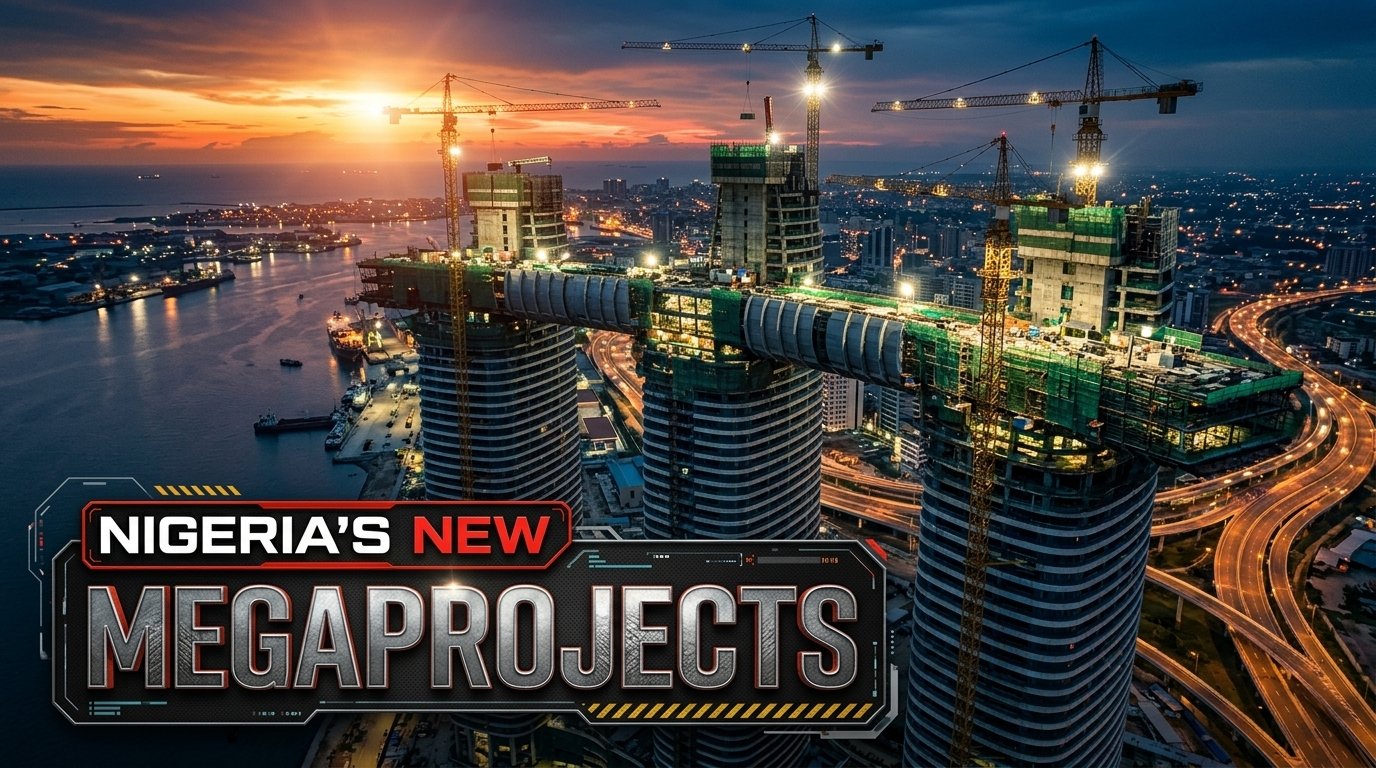
Beyond macroeconomic indicators, Nigeria is actively reshaping its physical and industrial future through a sweeping series of megaprojects spanning multiple states. From multi-billion-dollar transportation corridors and green manufacturing zones to agricultural processing plants and urban modernization initiatives, these large-scale investments are designed to diversify the economy, reduce import reliance, and generate sustainable long-term prosperity.
2. Number 1: Rail-Connected Industrial Park and Deep Sea Port Project
Revitalizing Port Harcourt’s Industrial Capacity
Located in Port Harcourt, a monumental $3.2 billion infrastructure initiative is currently underway to drastically revitalize the region’s industrial and logistical capabilities. Spearheaded by a Nigerian subsidiary of the China Civil Engineering Construction Company (CCECC), this ambitious program represents a landmark investment in national connectivity.
Integrating Rail and Maritime Logistics
The project centers on the construction of a modern rail-connected industrial park paired with a deep sea port on Bonny Island, serving as critical twin nodes for regional trade. An impressive 1,443-kilometer rail line stretches from Port Harcourt all the way to Maiduguri, acting as a high-capacity commercial artery connecting the southern coast to the country’s northeast. Operating at freight speeds of 60 to 80 km/h and passenger speeds of 80 to 100 km/h, this corridor is designed to slash transportation overhead and dramatically enhance supply chain efficiency.
3. Number 2: 1-Gigawatt Solar Factory Project in Cross River State
A Green Energy Revolution
A major green energy revolution has taken root in Cross River State through the development of a massive 1-gigawatt solar manufacturing facility. This $500 million collaborative initiative brings together the Infrastructure Corporation of Nigeria (InfraCorp), Solar International BV, and the African Green Investment Bank, marking a major milestone in the country’s transition toward sustainable energy sources.
Boosting Foreign Direct Investment
Strategically located within the state’s designated free trade zone, the solar factory leverages favorable regulatory frameworks to attract foreign direct investment and stimulate technological knowledge transfer. By establishing a localized green manufacturing ecosystem, the project not only positions Cross River State as an environmental leader but also fosters regional employment and high-tech industrial growth.
4. Number 3: Coal-Based Fertilizer Plant Project
Strengthening Bilateral Technological Exchange
To bolster national agricultural productivity and food security, Nigeria and Indonesia have partnered to construct an advanced coal-based fertilizer plant. Facilitated by Nigeria’s National Agency for Science and Engineering Infrastructure (NASENI), the facility incorporates specialized technology and heavy machinery supplied by Indonesia’s PT Saputra Global Harvest.
Achieving National Food Self-Sufficiency
Agriculture remains a cornerstone of the Nigerian economy, yet reliance on imported agricultural nutrients has historically exposed farmers to volatile global supply chains. By manufacturing high-quality fertilizers domestically, this plant ensures a stable, sustainable nutrient supply for crops across the country, dampening input costs and driving long-term agricultural resilience.
5. Number 4: Gas Supply Facility for the Dangote Fertilizer Plant
Powering Industrialization with Domestic Gas Reserves
In a landmark partnership involving Shell, TotalEnergies, Eni, and the Nigerian National Petroleum Corporation Limited (NNPC), a new gas supply infrastructure is being built to feed the massive Dangote fertilizer facility. The project is designed to deliver 100 million standard cubic feet of natural gas per day from the Nami field over a 10-year operational window.
Capitalizing on Africa’s Largest Reserves
Boasting the largest natural gas reserves on the African continent, Nigeria is uniquely positioned to leverage these resources for domestic industrialization. This gas supply pipeline ensures that local manufacturing plants and power generation facilities receive the reliable energy feedstocks required to scale production, reduce import dependence, and fuel broad economic expansion.
6. Number 5: New Steel and Military Hardware Manufacturing Plant
Reviving Ajaokuta’s Steel Potential
The revitalization of Nigeria’s foundational steel sector is moving forward with the construction of an integrated manufacturing plant dedicated to both commercial steel production and defense hardware. This multi-faceted industrial project is engineered to attract foreign direct investment, supply vital iron rods for national road construction, and drastically curtail reliance on foreign construction materials.
Enhancing Domestic Security and Defense Capabilities
In addition to supporting civil infrastructure, the facility includes specialized lines for manufacturing essential military hardware—including helmets, protective body armor, tactical vehicles, and basic defense equipment. Producing these strategic items domestically bolsters national security, reduces vulnerability to external supply disruptions, and builds a highly skilled domestic defense engineering workforce.
7. Number 6: Onitsha Mixed-Use Industrial City Project
Spanning 4,000 Hectares of Economic Potential
The proposed Onitsha Industrial City (also referred to as the Ayingba Industrial City) is a sprawling mixed-use development spanning over 4,000 hectares of land. Designed as an integrated economic engine, the city incorporates dedicated industrial, commercial, residential, and recreational zones under a special economic zone designation.
Fostering Research, Development, and Sustainability
The industrial city prioritizes eco-friendly infrastructure, featuring integrated green spaces, renewable energy integration, and state-of-the-art research and development centers. By fostering active collaboration between private manufacturing enterprises and academic institutions, the hub aims to accelerate export-oriented production and elevate Nigeria’s competitiveness in global markets.
8. Number 7: Radisson Hotel Project in Benin City
Elevating Regional Tourism and Hospitality
To support expanding business travel and tourism infrastructure, a world-class 169-room Radisson hotel is currently under construction in Benin City. Inspired by contemporary Scandinavian architectural design, the upscale property aims to provide premium hospitality accommodations for both domestic and international visitors.
Modern Amenities for Business and Leisure Travelers
The facility features executive suites, specialized dining venues, fully equipped fitness centers, and recreational amenities. By upgrading the local hospitality landscape, the project complements broader economic diversification efforts, ensuring that major regional urban centers can comfortably host international conferences, trade delegations, and commercial investors.
Frequently Asked Questions (FAQs)
1. What is the total length and primary route of the Port Harcourt rail line project?
The rail line stretches 1,443 kilometers, connecting Port Harcourt in the south to Maiduguri in the northeast of Nigeria.
2. Who are the primary international partners in the Cross River State solar factory project?
The $500 million project is a collaboration between InfraCorp of Nigeria, Solar International BV, and the African Green Investment Bank.
3. What is the main objective of the coal-based fertilizer plant?
Facilitated by NASENI with Indonesian technology, the plant aims to produce fertilizers locally to enhance food security and reduce Nigeria’s reliance on agricultural imports.
4. How much natural gas will be supplied to the Dangote fertilizer plant project?
The gas supply facility will deliver 100 million standard cubic feet of natural gas per day from the Nami field for a period of 10 years.
5. What dual purpose does the new steel manufacturing plant serve?
Beyond supplying iron rods for national road construction and infrastructure, the plant manufactures essential military hardware to enhance domestic defense capabilities.
6. How large is the Onitsha Mixed-Use Industrial City project?
The proposed industrial city spans over 4,000 hectares and features special economic zone status to attract both domestic and foreign investments.
7. What design style inspires the new Radisson hotel project in Benin City?
The 169-room hotel features contemporary Scandinavian design elements, offering luxury accommodations, executive suites, and advanced business and wellness amenities.
Authoritative References
-
National Bureau of Statistics (NBS) Nigeria – Gross Domestic Product Performance Reports
-
Federal Ministry of Information and National Orientation (Nigeria) – Infrastructure Development and Strategic Project Updates
-
Infrastructure Corporation of Nigeria (InfraCorp) – Green Energy and Industrialization Investment Portfolios