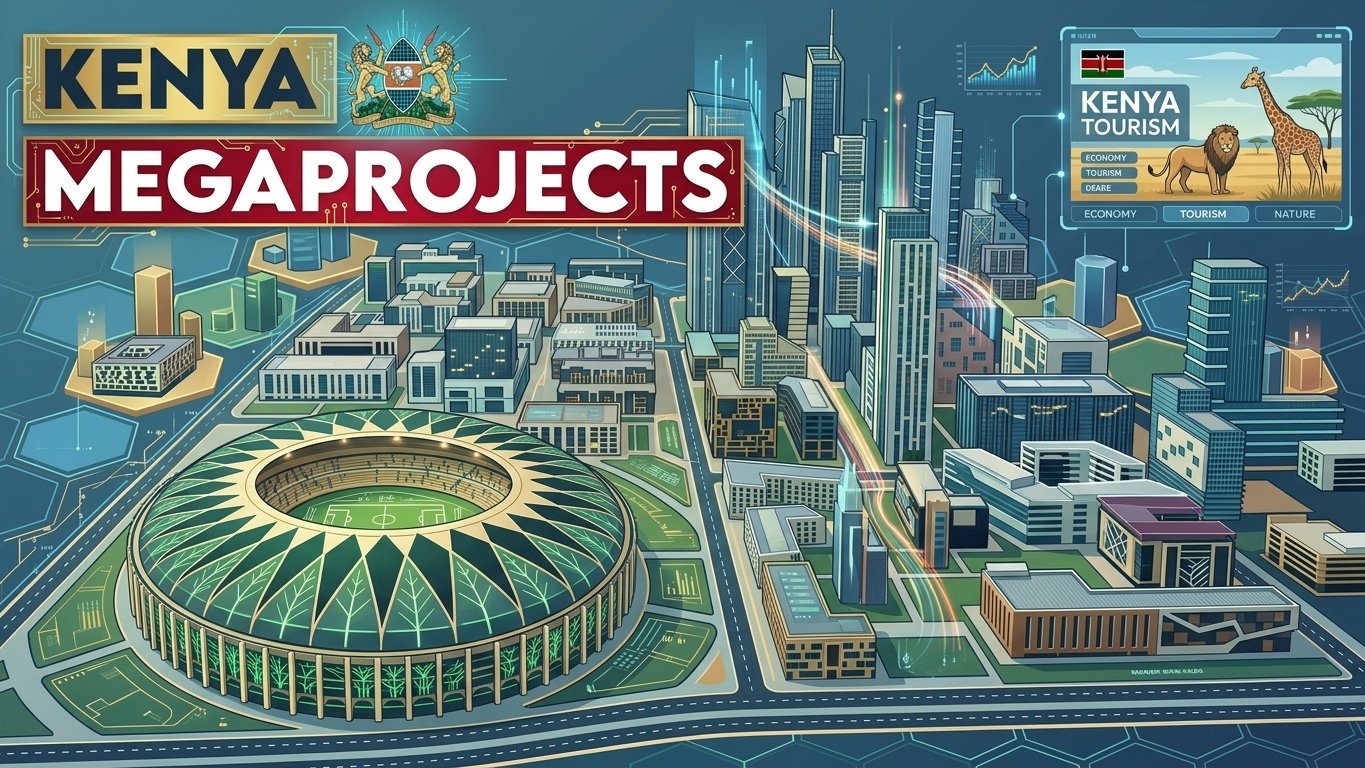
Infrastructure Powerhouse: Key Mega Projects Shaping Kenya
Kenya’s strategic focus on large-scale infrastructure projects serves as the foundation for its economic expansion across East Africa. From high-speed transport links and green industrial nodes to smart cities and digital data centers, these strategic projects enhance regional trade, attract foreign direct investment, and promote sustainable urban growth.
Below is an overview of the pivotal infrastructure projects driving Kenya’s ongoing transformation.
1. Transportation & Maritime Logistics
Robust transportation links are critical for connecting Kenya’s inland markets to regional supply chains and international maritime corridors.
[ Gulf / Global Maritime Routes ]
                |
     [ Port of Mombasa / Dongo Kundu SEZ ]
                |
     [ Mombasa Gate Bridge (Likoni Channel Crossing) ]
                |
     [ Upgraded A8 Trunk Highway (Nairobi-Mombasa Corridor) ]
                |
     [ Nairobi Economic & Commercial Hub ]
Mombasa Gate Bridge Project
Scope & Design: A 1.4 km cable-stayed bridge standing 69 meters above the Likoni Channel to allow large container ships to navigate into Kilindini Harbour without disruption.
Impact: Replaces the decades-old Likoni Ferry system, eliminating severe vehicular congestion and creating a direct four-lane link between Mombasa Island and the South Coast.
Partnerships: Developed by the Kenya National Highways Authority (KeNHA) with major financial and technical support from the Japan International Cooperation Agency (JICA).
Dongo Kundu Special Economic Zone (Mombasa)
Scope: Establish Kenya’s first fully fledged free trade zone adjacent to the Port of Mombasa, covering a logistics hub, free port, and heavy industrial zone.
Funding: Backed by JICA through grants and concessional loans totaling over $560 million.
Strategic Role: Directs trade inbound from Asia and Europe into East and Central Africa through streamlined customs handling and low-cost manufacturing space.
Nairobi–Mombasa Transport Highway Upgrade
Scope: Upgrading the critical 440+ km A8 transport artery connecting Kenya’s capital to its primary seaport into a modernized, high-capacity toll dual carriageway.
Strategic Priority: Replaces clogged 2-lane choke points to cut freight transit times from over 10 hours down to approximately 4.5 hours, reducing regional shipping costs and wear on heavy logistics fleets.
2. Urban Expansion & Housing Initiatives
Kenya’s rapid urbanization requires integrated housing models and smart, self-sustaining satellite cities to ease population pressures on established metropolitan centers.
Moko Housing Project (Machakos County)
Capacity: Construction of over 5,360 affordable housing units spanning a 55-acre development.
Investment: Exceeds 20 billion Kenyan Shillings ($150M+ USD).
Community Layout: Integrated mixed-income neighborhood featuring early childhood, primary, and secondary schools, commercial space, a dedicated fire station, and a police post.
Execution: Led by Epco Builders in alignment with UN-Habitat guidelines to support accessible urban housing.
Aiyana Green Smart City
Scale: A 60-square-mile sustainable, tech-integrated smart city situated on the Capiti Plains of Machakos County.
Key Districts: Designed to feature dedicated zones for innovation, agribusiness, healthcare, aerospace/diplomatic activities, enterprise, and green industrial hubs.
Sustainability: Powered by renewable energy microgrids and designed around sustainable waste, water, and eco-friendly urban zoning models.
3. Industrial, Manufacturing & Energy Infrastructure
Building internal industrial capacity is key to shifting Kenya from a raw-commodity exporter to a value-added manufacturing and tech hub.
| Project | Location | Primary Focus | Key Features |
| Turkish Industrial Complex | Naivasha (Naivasha SEZ / Naivasha/Naivasha area) | Heavy Construction Materials & Goods | 100+ acre industrial complex housing six factories for ceramics, granite, furniture, and a major cement production plant. |
| Cloudon Green Data Center | Seven Forks Hydroelectric Region | Digital Infrastructure & Cloud Computing | 10-acre campus housing 2,500+ server racks; powered by hydro energy and a dedicated 10MW solar farm. |
Turkish Industrial Complex Key Details
Export Mix: Designed so 30% of output supplies Kenya’s internal housing/infrastructure boom, while 70% is exported to the wider East African Community (EAC).
Economic Boost: Provides thousands of direct skilled jobs while lowering reliance on imported building materials.
Cloudon Green Data Center Highlights
Capacity: 200,000 square feet of raised floor space funded through international private equity and the IFC.
Green Design: Employs closed-loop water-based cooling and clean energy to reduce operational carbon footprints, setting a benchmark for sustainable data center hosting across Sub-Saharan Africa.
Frequently Asked Questions
Why is the Mombasa Gate Bridge critical for regional logistics?
The Likoni Channel is currently traversed via ferries that suffer from frequent mechanical delays and capacity limits. The new 69-meter-high cable-stayed bridge provides continuous, uninterrupted freight movement between the Port of Mombasa, the South Coast, and Northern Tanzania without blocking maritime shipping traffic into Kilindini Harbour.
How do projects like Dongo Kundu SEZ benefit the broader East African region?
By pairing a free trade zone with deepwater port access, foreign companies can import raw materials, manufacture goods locally, and export them tax-efficiently across the East African Community (EAC) trade bloc.
How are Kenya’s new mega projects addressing environmental sustainability?
Developments like the Cloudon Data Center rely on dedicated hydro and solar power, while projects like Aiyana Green Smart City incorporate strict environmental zoning, waste management systems, and eco-friendly urban master planning.