The Chinese EV Revolution: How China Is Reshaping South Africa’s Automotive Landscape
For over a century, the highways of South Africa echoed with the mechanical legacy of European and Western automotive dominance. Brands like Volkswagen, BMW, Mercedes-Benz, and Toyota were more than simple modes of transportation—they served as cultural symbols of status, reliability, and economic achievement.
However, that long-standing era of Western dominance is undergoing a structural shift. Driven by affordable electric vehicles (EVs), feature-heavy interior packages, state-backed investments, and industrial expansion, Chinese automakers are fundamentally altering South Africa’s automotive landscape.
The Shift Away from Traditional Brands
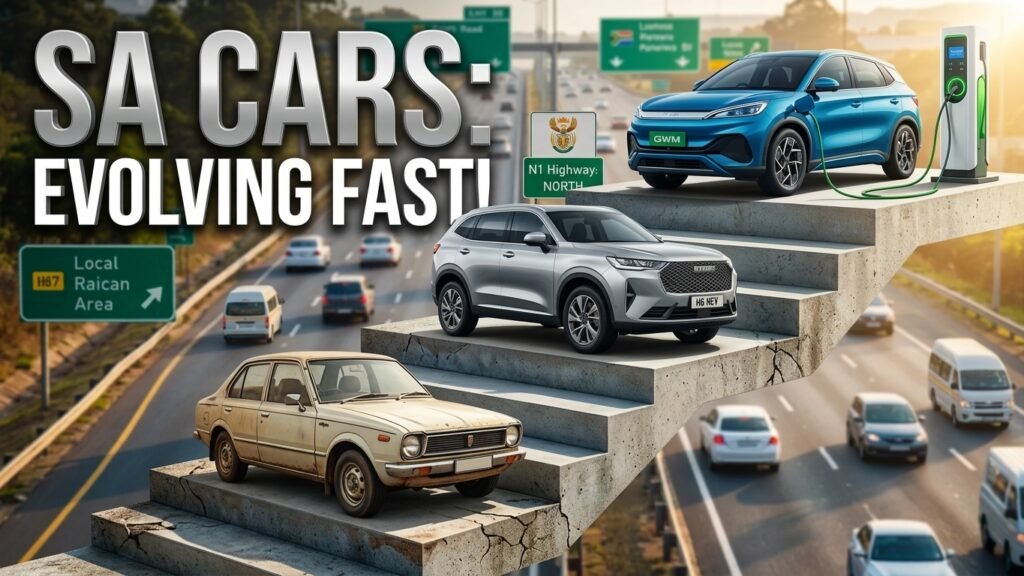
Over the past five years, a quiet transformation has unfolded across South African dealerships. Chinese automotive brands—such as Chery, Haval (a division of Great Wall Motor / GWM), Omoda, and BYD—have rapidly expanded their market footprint.
Data from major local financial institutions highlights the speed of this transition:
Financing Surge: According to Standard Bank, approximately 36% of new vehicle loans in South Africa now finance Chinese brands—up from just 5% five years prior.
Volume Gains: Models like the Haval H6 SUV have outpaced legacy European competitors like the Volkswagen Tiguan in total monthly unit sales.
This migration is not merely a shift in consumer preference; it reflects a broader economic reality. Amid rising costs for basic living essentials—such as housing, utilities, and food—South African households are actively seeking value without compromising modern vehicle tech.
Strategic Value: Flipping the Pricing Model
Chinese automakers have gained significant ground by restructuring how vehicles are packaged and priced.
Traditional Western Model                    Chinese Strategy Model
┌──────────────────────────────┐              ┌──────────────────────────────┐
│ Base Entry Price             │              │ All-Inclusive Base Package   │
│  + Add-on Leather Seats      │              │  ✓ Panoramic Sunroof         │
│  + Add-on Tech/Infotainment  │  ─────────►  │  ✓ Heated Leather Seats      │
│  + Add-on Safety Features    │              │  ✓ Full ADAS Safety Suite    │
│  = High Total Luxury Price   │              │  = Substantially Lower Cost  │
└──────────────────────────────┘              └──────────────────────────────┘
Rather than advertising stripped-down entry-level vehicles and charging extra for premium add-ons, Chinese OEMs frequently include high-end features as standard equipment. Features such as panoramic sunroofs, adaptive cruise control, heated seats, and dual-screen digital cockpits are delivered at price points significantly below European equivalents.
By bridging the gap between premium feature desires and tight consumer budgets, Chinese manufacturers have democratized access to modern vehicle amenities.
The Local Industrial Risk: Fully Built Imports vs. Local Manufacturing
While Chinese imports provide clear financial relief for consumers, they present a economic challenge to South Africa’s domestic manufacturing sector.
South Africa’s legacy original equipment manufacturers (OEMs)—such as Mercedes-Benz, BMW, Ford, Toyota, Isuzu, and Volkswagen—operate major production facilities across the Eastern Cape, Gauteng, and KwaZulu-Natal.
| Dimension | Legacy Western / Japanese OEMs | Chinese EV Brands (Current Status) |
| Local Footprint | Established plants (e.g., Rosslyn, East London, Durban, Silverton) | Primarily imported completely built-up (CBU) units |
| Employment | ~110,000 direct manufacturing jobs; ~350,000 supply chain jobs | Limited local assembly to date; feasibility studies active |
| Economic Role | High local supply chain integration and direct exports | Rapid dealership and parts network expansion |
| Market Strategy | Transitioning local plants toward hybrid/PHEV exports | Introducing low-cost BEVs and PHEVs directly to retail |
Because most Chinese vehicles currently arrive as completely built-up (CBU) imports, every significant shift in market share away from locally manufactured vehicles risks impacting domestic manufacturing and component supply-chain jobs.
The EV Landscape: Transitioning to New Energy Vehicles
South Africa’s electric vehicle market is evolving rapidly. While premium brands initially dominated early battery-electric vehicle (BEV) sales, Chinese manufacturers have targeted the affordable mass-market segment.
        PREMIUM EV SEGMENT                         MASS-MARKET EV SEGMENT
┌──────────────────────────────┐              ┌──────────────────────────────┐
│  • Volvo EX30                │              │  • BYD Dolphin / Surf        │
│  • BMW iX Series             │  ─────────►  │  • GWM Ora 03 / Ora 5        │
│  • Mercedes-Benz EQ Series   │              │  • Chery Plug-In Hybrids     │
│  (R750,000 - R2,000,000+)    │              │  (R340,000 - R550,000)       │
└──────────────────────────────┘              └──────────────────────────────┘
Market Contenders
Volvo EX30: Earned significant traction in the premium segment, finishing as South Africa’s top-selling BEV in 2024.
BYD (Build Your Dreams): Introduced models such as the Atto 3, Seal, and the BYD Dolphin series. The Dolphin Surf variant established itself as one of the country’s most accessible entry-point EVs.
GWM (Great Wall Motor): Expanded its electric and hybrid footprint with the Ora series (such as the Ora 03 and Ora 5), offering distinct styling and modern driver-assistance tech at competitive prices.
Plug-in Hybrids (PHEVs): To address local power grid constraints and long-distance driving demands, brands like Chery and GWM are expanding PHEV lineups to serve as a practical bridge to full electrification.
Deepening Industrial Roots: Feasibility and Local Assembly
Recognizing that long-term sustainability in South Africa requires local integration, Chinese automakers are beginning to move beyond pure distribution models:
Chery Industrial Footprint: Chery has established dedicated regional distribution and parts warehousing facilities in Boksburg, Gauteng, while completing feasibility studies for potential local assembly operations.
BYD Network Growth: BYD has continuously expanded its localized dealership network toward target goals of 30+ locations, alongside ongoing government dialogues regarding long-term regional industrial plans.
GWM Assembly Feasibility: GWM leadership has indicated that scaling sales volumes makes completely knocked-down (CKD) local assembly an increasingly viable next step.
Geopolitical Underpinnings and Economic Sovereignty
The rapid growth of Chinese automotive brands in Africa aligns with broader economic frameworks, such as China’s Belt and Road Initiative (BRI). Beyond vehicle sales, Chinese firms are deeply involved in telecommunications infrastructure, logistics ports, rail development, and financial systems across the continent.
For South Africa, this industrial shift presents both opportunity and strategic responsibility:
The Opportunity: Accelerated adoption of clean transportation, access to affordable technology, potential new foreign direct investment (FDI), and industrial modernization.
The Imperative: Formulating clear policy frameworks that encourage foreign OEMs to transition from importers to local producers—ensuring technology transfer, local workforce training, and preservation of domestic supply chains.
The transformation of South Africa’s roads mirrors broader changes in the global economic order. How South Africa balances consumer affordability with industrial self-reliance will determine the structure of its automotive sector for decades to come.
Frequently Asked Questions
Why are Chinese vehicles growing so quickly in South Africa?
Chinese manufacturers offer feature-rich vehicles (such as advanced safety suites, leather interiors, and modern infotainment) at price points substantially lower than traditional European or American equivalents, making them attractive to cost-conscious buyers.
Are Chinese automakers building vehicles locally in South Africa?
Currently, most Chinese vehicles are imported as fully assembled (CBU) units. However, major brands like Chery, BYD, and GWM have established local logistics hubs and are actively conducting feasibility studies for future local assembly (CKD) operations.
What are the most affordable Chinese EVs available in South Africa?
Models such as the BYD Dolphin series and the GWM Ora series represent some of the most competitively priced battery-electric vehicles in the South African market, helping lower the cost barrier to EV ownership.
Key References & Further Reading
National Association of Automobile Manufacturers of South Africa (NAAMSA): Official automotive trade, export, and production volume reports.
Standard Bank Automotive Financial Insights: Vehicle asset finance trends and market share breakdowns in South Africa.
Windsor-Detroit & Global Infrastructure Studies: Comparative analysis of international trade corridors and industrial supply-chain integration.